Why Some Orthodontic Practices Look Profitable But Aren't: Understanding Contracts Receivable

Imagine finding the perfect orthodontic practice to purchase - strong patient base, established reputation, reasonable asking price. You're ready to sign. But hidden in the financials is a detail that could mean the difference between a profitable acquisition and years of financial struggle: contracts receivable. Before we dive into this critical concept, let's start with the basics.
What is Accounts Receivable?
Put simply, Accounts Receivable (AR) is money you've already earned, but haven't yet received payment on.
In most dental specialties, this is minimal. Here's why:
• Fee-for-Service (FFS) practices:
Patients pay in full the same day. A filling is done, the patient pays $200, and the transaction is complete.
• Insurance-based practices:
The treatment is completed, the claim is submitted, and when the insurance company pays (usually within 30-60 days), the AR is resolved.
In both cases, the work is finished quickly - often in one visit or over a few weeks - so money owed is typically collected within a month or two.
Why Orthodontics Is Different: Enter Contracts Receivable
Orthodontic treatment runs on a different timeline than most other dental procedures. Unlike a crown that can be placed in two visits, or even a root canal and restoration that can be performed in three, orthodontic treatment spans 18-24 months with 15-24 appointments. As treatment is performed over a longer period, and the cost can run thousands of dollars, many orthodontic offices allow for some flexibility with remuneration to make it easier for their patients to afford treatment. Let’s break down the two most common payment structures:
Example 1: The Pay-in-Full Patient
• Day 1: Patient begins treatment. Total cost: $6,000. Patient pays in full.
• Months 1-24: Treatment continues. No additional revenue from this patient.
• For the practice: All revenue received upfront, but work continues for two years.
Example 2: The Payment-Plan Patient
• Day 1: Patient begins treatment. Total cost: $6,000. Patient puts $1,500 (25%) down.
• Months 1-18: Patient pays $250/month ($4,500 total) while treatment continues.
• For the practice: Revenue comes in gradually as work is performed.
That remaining balance - the $4,500 still owed and being paid overtime - is called Contracts Receivable. It's a specific type of Accounts Receivable unique to practices with long-term treatment and payment plans.
While other dental specialists sometimes offer payment plans for large cases, the treatment is typically completed within weeks or months, meaning the acquiring doctor typically isn’t completing the expensive cases started by the previous owner. With Ortho, there can be a full year or more of treatment left, and the selling doctor typically only sticks around for a couple of months post-sale. These unfinished cases become the responsibility of the acquiring doctor to complete, hence why it’s a larger factor to consider when looking at an office to purchase.
Why This Matters When Buying a Practice: The Cash Flow Reality
When you acquire an orthodontic practice, you inherit all active patients - including the responsibility of completing their treatment. This creates a critical question: Has the practice already collected the revenue for these patients, or is money still coming in?
Scenario A: High Contracts Receivable (Good for Buyer)
Dr. Coy’s practice has $400,000 in contracts receivable - money that patients will pay over the next 12-18 months as you complete their treatment. This means:
• ✓ Predictable cash flow to cover payroll, rent, and your loan payment
• ✓ Revenue coming in while you perform the work
• ✓ Strong financial cushion as you build your new patient base
Scenario B: Low Contracts Receivable (Potential Red Flag)
Dr. Coy’s practice has only $50,000 in contracts receivable - most patients paid in full upfront. This means:
• ✗ You inherit 300 patients requiring 6-18 months of continued treatment
• ✗ All the revenue for these patients was already collected (and likely spent by Dr. Coy)
• ✗ You're performing $500,000+ worth of work with little to no income from these patients
• ✗ You must cover all practice expenses while completing "free" treatment
The Bottom Line:
In Scenario B, you could be operating at a loss for your first 12 months, even though the practice looks healthy on paper. Additionally, the practice revenue will be higher, potentially inflating the purchase price.
What You Should Do
Every practice acquisition involves some patients who have prepaid in full, meaning there will be work to complete that generates no immediate revenue. This is normal and expected and is part of the goodwill in the transaction. The ratio of how much of the revenue has been realized versus what is still in contracts receivable matters enormously, and should be accounted for during due diligence.
Before making an offer, work with a CPA or a buyer’s representative who specializes in dental acquisitions to:
1. Calculate the contracts receivable ratio: What percentage of active patients still owe money versus have paid in full?
2. Project first-year cash flow: Based on the existing patient base and payment plans, what revenue can you count on while completing inherited treatment?
3. Adjust the purchase price: A practice with low contracts receivable may need a price reduction to account for the "free" work you'll be performing.
4. Negotiate transition terms: Consider asking the seller to leave prepaid funds in the practice account or structure the purchase price to account for future revenue gaps.
Key Questions to Ask:
• What is the total contracts receivable balance?
• What percentage of active patients are on payment plans versus paid in full?
• How many months of treatment remain for the average active patient?
• Will any prepaid patient funds remain in the practice account after closing?
Understanding contracts receivable isn't just about numbers - it's about ensuring your first year of practice ownership is financially viable, not just on paper, but in reality.
Written by: Conor DePalma and Eric J. Coy, DDS
When buying or selling a dental practice, there are several things to coordinate: financing, contracts, employees, equipment, leases, and closing dates. Insurance is one of the most important pieces, and the time to address it is early rather than later.

Wondering if your dental malpractice premium still makes sense? See how our annual review and remarketing process works, and when to shop the market.

Dental Malpractice Insurance in New York: What Every Dentist Should Know

A plain English look at how dental malpractice insurance works in California, plus the questions our team walks through with practice owners. Let's talk.
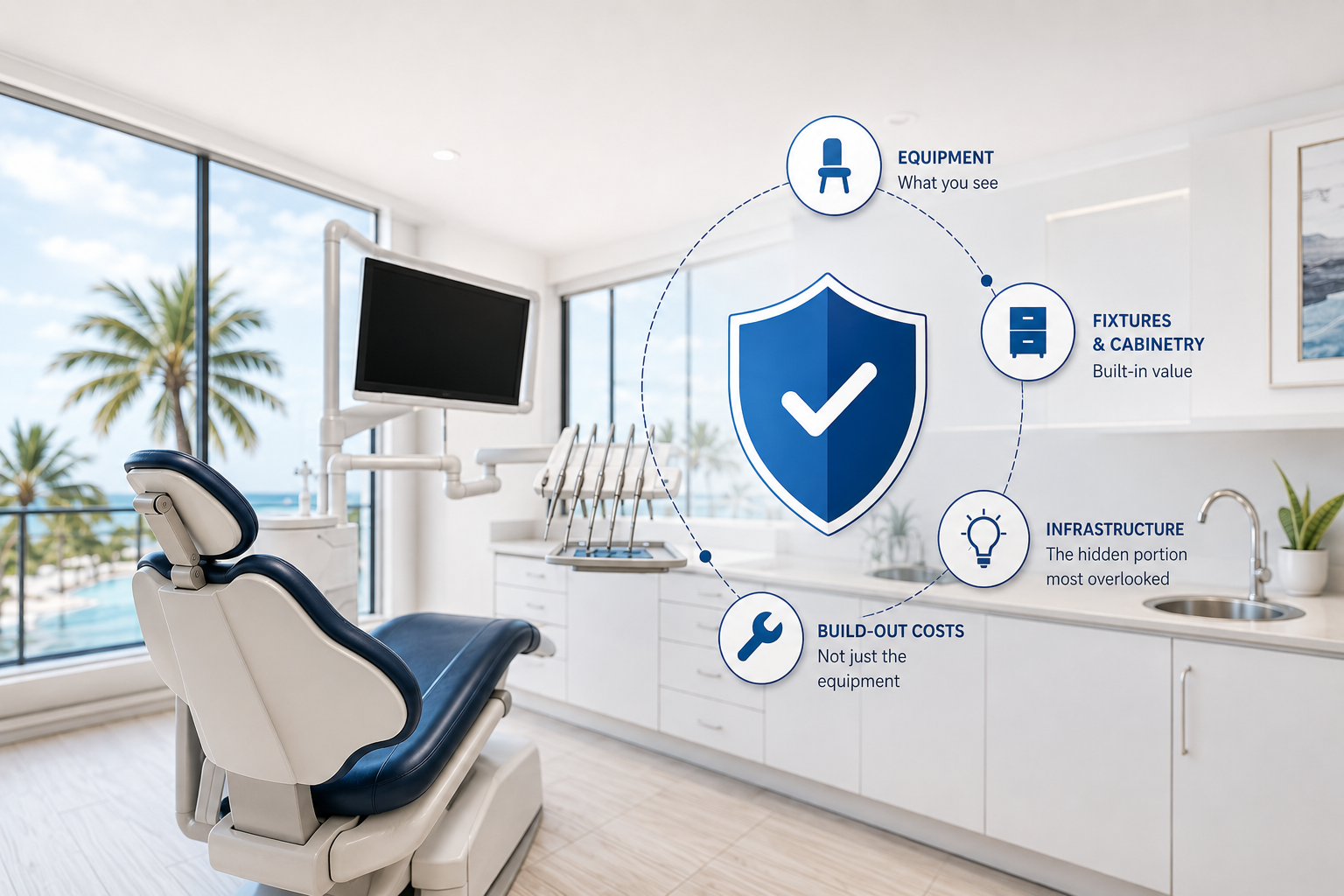
How much is enough? Defining business personal property and uncovering the “hidden” portion many practice owners miss

The Benefits of COLA
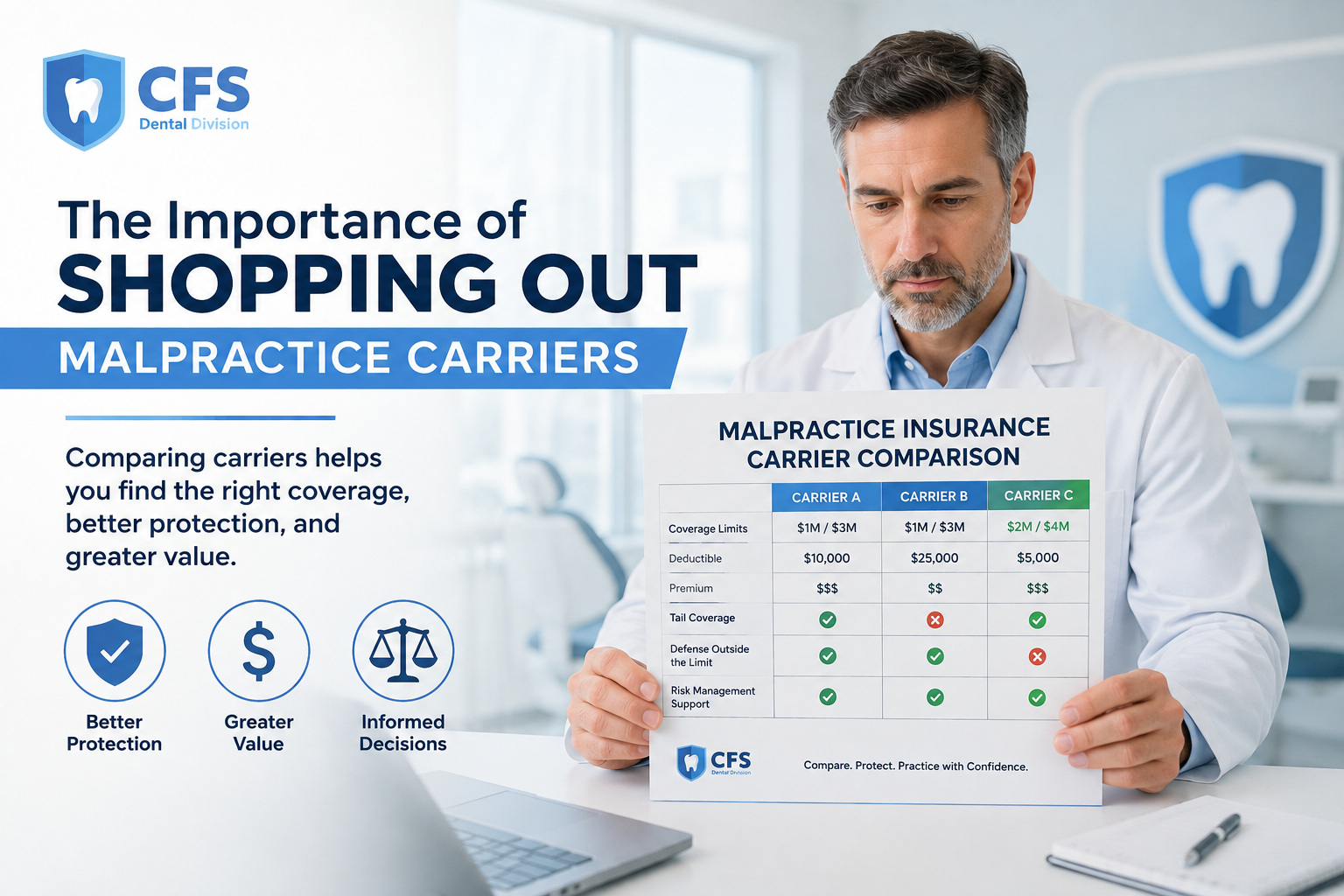
The Importance of Shopping Out Malpractice Carriers

Surplus Lines Insurance: What It Is, Why It Exists, and When You Might Need It
Why Focusing on Protection - Not Just Price - Is Most Important When Buying Business Insurance For Your Dental Practice.
Buying Your First Dental Practice: An Insurance Checklist for New Owners