The Hidden Cost of Recovery: How BOE Protects Your Investment

As a dental practice owner, you are solely responsible for keeping your business running. So, if you become injured and are unable to work, your income might stop but the operating costs of your practice will continue. This is where BOE insurance becomes a very important piece of financial and practice management strategy.
What expenses does BOE typically cover?
- Employee Salaries: Wages, payroll taxes, benefits for your staff
- Rent or Mortgage Payments: The cost of your office space
- Utilities and Maintenance: Electric, gas, water, internet, phone services
- Insurance Premiums: Malpractice, general liability, property insurance
- Professional services: Accounting, legal and billing services
- Lease Payments: dental chairs, x-ray machines
Features and Things to consider:
Monthly Benefit
- Determining the benefit amount is one of the first steps for getting BOE. The monthly benefit amount should match or slightly exceed the average monthly eligible expenses.
Increase Options
- Increase riders are extremely important to have in these policies for a couple of reasons.
One, if you’re just starting your business you may not want to pay for a large benefit of BOE up front so, you are able to get a smaller benefit to lock your health and rates and then increase the benefit later on when the practice is doing well.
Two, As your business starts to grow so will your expenses and it is important to make sure you increase your BOE to properly cover you throughout the years.
Tax Deductible
- The premiums you pay on BOE insurance are generally tax-deductible as a business expense.
In some cases, a Business Overhead Expense policy may be required when obtaining a loan but whether it’s required or not, it is a policy that every owner should have. When you get Business Overhead Expense insurance, you are implementing a safe guard for your practice, protecting your staff, and protecting your financial future against any unexpected accidents.
Written by: Michael Dougherty

When buying or selling a dental practice, there are several things to coordinate: financing, contracts, employees, equipment, leases, and closing dates. Insurance is one of the most important pieces, and the time to address it is early rather than later.

Wondering if your dental malpractice premium still makes sense? See how our annual review and remarketing process works, and when to shop the market.

Dental Malpractice Insurance in New York: What Every Dentist Should Know

A plain English look at how dental malpractice insurance works in California, plus the questions our team walks through with practice owners. Let's talk.

How much is enough? Defining business personal property and uncovering the “hidden” portion many practice owners miss

The Benefits of COLA
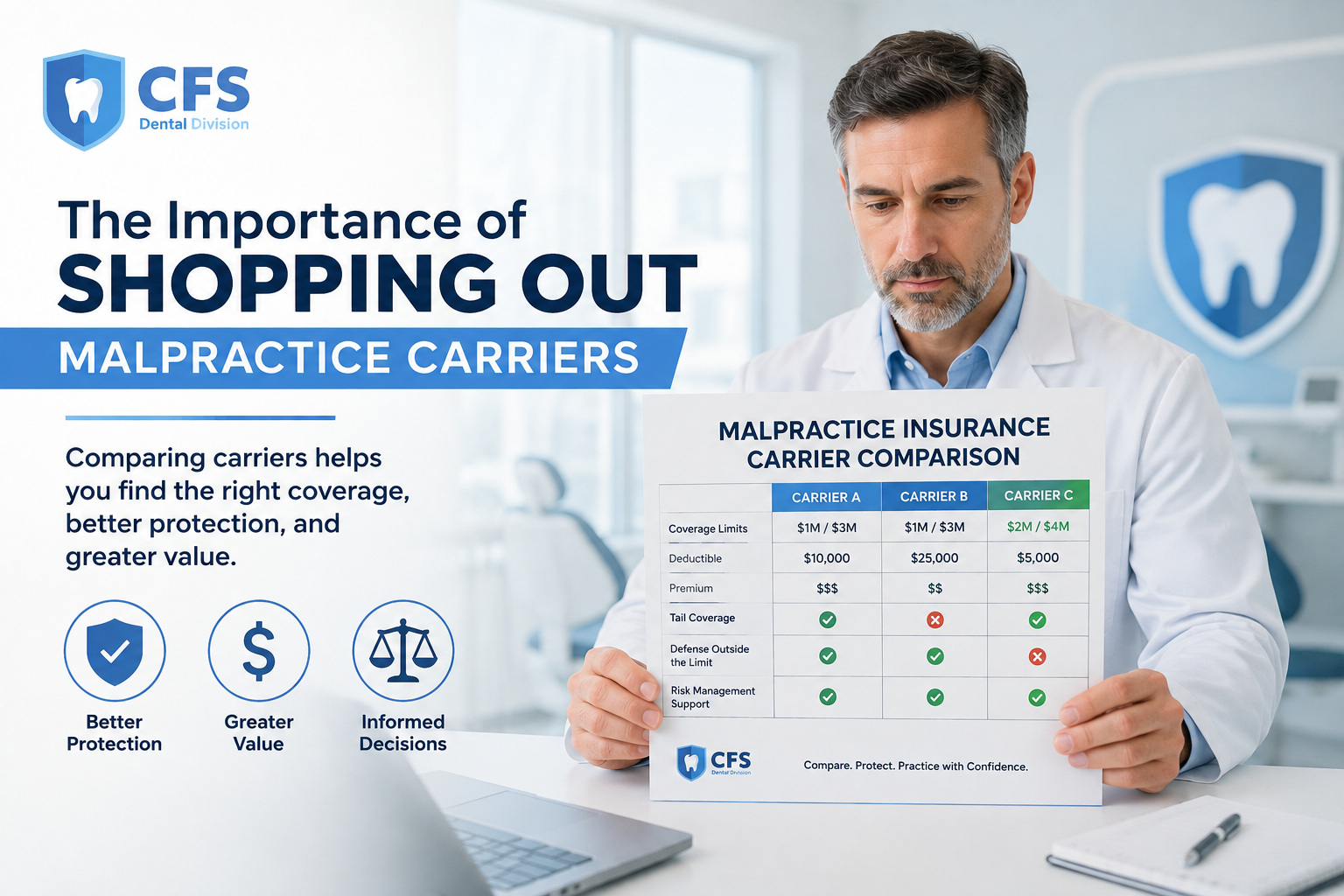
The Importance of Shopping Out Malpractice Carriers

Surplus Lines Insurance: What It Is, Why It Exists, and When You Might Need It

Why Focusing on Protection - Not Just Price - Is Most Important When Buying Business Insurance For Your Dental Practice.

Buying Your First Dental Practice: An Insurance Checklist for New Owners