Buying Your First Dental Practice: An Insurance Checklist for New Owners
Purchasing your first dental practice is one of the biggest milestones in your career. Whether it be after years of school, residency, and working as an associate, you are finally investing in your own future. While much of the focus is often on financing, equipment, staffing, and patient transitions, one critical area is often overlooked until the last minute: insurance. Having proper insurance in place before closing protects not only your investment but also your ability to continue operating if the unexpected happens. Below are some of the most important coverages to discuss with your CFS advisor before you take ownership.
Life Insurance
If you are financing the purchase of a dental practice, your lender may require you to obtain life insurance as a condition of the loan. The purpose is straightforward: if the borrower were to pass away unexpectedly, the proceeds can help satisfy the remaining loan balance, reducing financial risk for both the lender and your family or business partners.
Even if life insurance is not required by your bank, it is an important consideration. As a new practice owner, you're likely taking on one of the largest financial obligations of your career. A properly structured life insurance policy can provide financial security for your loved ones, help preserve the value of your practice, and provide liquidity to meet outstanding debts or ownership obligations.
If you have a business partner, life insurance can also be used to fund a buy-sell agreement, allowing the surviving owner to purchase the deceased partner's ownership interest without placing additional financial strain on the business.
General Liability Insurance
General liability insurance is one of the foundational coverages every dental practice should carry. It protects your business against claims involving bodily injury or property damage to third parties. For example, if a patient slips in your waiting room or a delivery person is injured on your property, general liability coverage may help pay for legal expenses, medical costs, and settlements, subject to the policy terms.
While your professional liability (malpractice) insurance protects you for claims arising from the dental care you provide, general liability addresses risks associated with simply operating a business. The two policies serve very different purposes, and both are essential components of a comprehensive risk management plan.
Business Personal Property
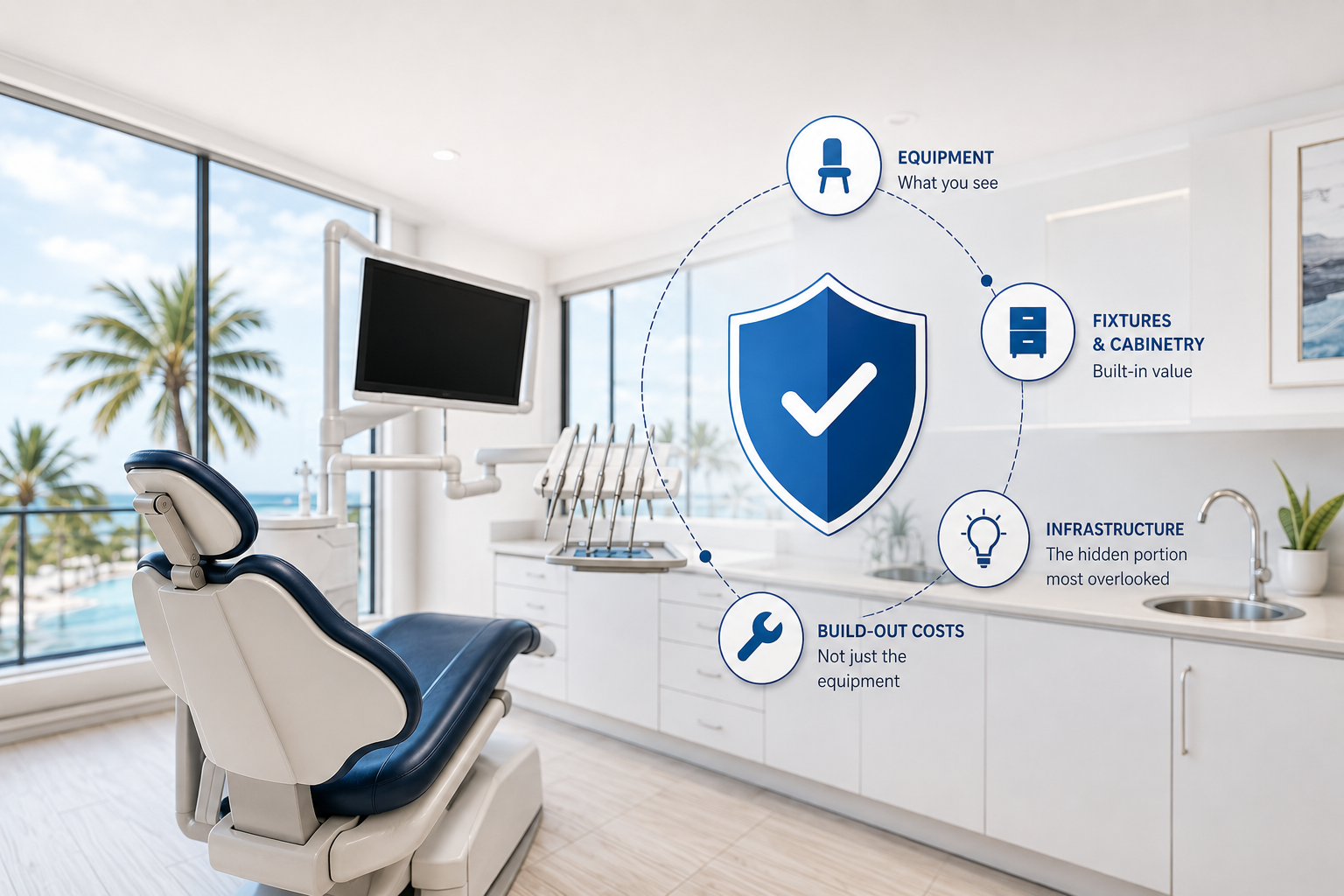
Dental offices contain hundreds of thousands of dollars’ worth of equipment, technology, instruments, furniture, and supplies. From digital imaging systems and operatory chairs to computers and sterilization equipment, these assets are essential to keeping your practice running. Business personal property coverage helps protect these items from covered losses such as: Fire, Theft, Vandalism, Certain types of water damage, Wind or storm damage and more.
Without adequate coverage, replacing damaged or stolen equipment could create a significant financial burden and interrupt patient care. It is important to periodically review your policy limits, especially after purchasing new equipment or expanding your office.
Renovating Your New Practice? These are the Insurances to Secure
Many first-time practice owners purchase an existing office with plans to renovate or complete a build-out before opening. If that is a part of your purchasing plan, it's important to understand that builder's risk insurance and general liability insurance are not interchangeable or the same as the insurance examples listed above.
Builder's risk insurance is designed to protect the construction project itself. It generally covers the building under renovation, materials, fixtures, and equipment while work is in progress. If construction materials are stolen or a fire damages the project before completion, builder's risk coverage may help cover those losses.
General liability insurance during construction protects against claims involving bodily injury or property damage to others arising out of your business operations or the construction project. For example, if a visitor is injured at the construction site or your project causes damage to a neighboring property, general liability insurance may respond.
Depending on your purchase agreement and construction contracts, your contractor may carry some of these coverages, but it is important to understand exactly what is, and is not being provided. Reviewing responsibilities before construction begins can help avoid costly coverage gaps.
Do Not Wait Until Closing Day!
Insurance is often one of the last items discussed before a practice acquisition closes, but it should not be. Many policies require underwriting, coordination with lenders, landlords, contractors, or attorneys, and sufficient time to ensure everything is effective on the day ownership transfers. Working with a CFS advisor who understands dental practices can help ensure your insurance program aligns with your purchase agreement, financing requirements, and long-term business goals.
Buying your first dental practice is an exciting step toward building long-term wealth and professional independence. Taking the time to understand your insurance needs well before closing can help prepare you both financially and mentally so your hard-earned opportunity is fruitful.
Written by: Julia Breneman