Is Patient Perception Your #1 Risk

When you hear someone say “Dental Malpractice,” where does your mind go first? Do you think about the premium you pay for insurance? Do horrific stories of patient allegations fill your mind?
Contact Us Today
For me, I remember a conversation I once had with a mentor. “What do you think causes most malpractice lawsuits?” she asked. I began thinking of a long list of complex procedures that often make the headlines when it comes to high payouts. “Is it anesthesia? Surgical placement of implants? Third molar extractions?” My mind raced, but her simple answer surprised me: “Bedside manner.”
The Common Defense
If you ask an insurance professional how to defend against malpractice claims, they’ll likely say “Risk Management.” This is a good starting point. Within the context of dental malpractice, risk management strategies often involve controls like patient consent forms, advanced patient charting, and medical history reviews. These mechanisms are meant to solidify a dentist’s defensibility when a complaint or lawsuit is filed.
Another answer you will likely receive is “Professional Liability Insurance” (aka dental malpractice coverage). This is the invisible armor every practitioner wears - a necessary safety net designed to catch them if a root canal goes south or a crown doesn't seat. But here is the twist: while malpractice insurance is a legal and financial necessity, it is fundamentally a reactive
tool. It is the "break glass in case of emergency" option for when the patient complaint has already been launched.
But what if the best way to keep that glass from breaking isn't found in a thicker insurance policy or more complex risk management strategies? How can a lawsuit be prevented from gaining traction in the first place? Is this possible, or just a pipe dream? Perhaps the answer can be found by first investigating the evolving nature of patient complaints.
The evolution of the dental chair
For decades, patient perception of whether a dentist was a “good dentist” could be determined with a single question: “Did it hurt?”
But as we navigate the second decade of the 21st century, the narrative in the dental chair has shifted. The modern patient isn't just worried about the needle; they’re worried about the vibe. They’re concerned about the "upsell," and whether their dentist is a clinician or a salesperson in scrubs.
From clinical fear to financial friction
If you browse through communities like Reddit, Quora, or other popular forums, a common refrain isn’t "It hurt." Instead, it’s: "Is my dentist scamming me?"
Patients walk in for a routine cleaning and walk out with a $4,000 treatment plan involving procedures they never knew existed. Social media has become a breeding ground for these frustrations, with users frequently sharing photos of their X-rays to crowdsource second opinions from strangers online.
In a 2024 legal review, a patient (referred to as Bobby) took advantage of a $59 "First-time patient special." After the initial evaluation, the dentist proposed an extensive treatment plan. Bobby later filed a lawsuit, alleging the "special" was a fraudulent lure designed to trap patients into high-cost procedures once they were in the chair [1].
A decade of change
The complaints of yesteryear were simpler, more mechanical. If we look back a decade or more, the data paints a different picture of patient dissatisfaction.
Research from 2010–2015 indicates that while clinical treatment was always a top concern, "Charging and Cost" was a much smaller slice of the pie, often hovering below 10% [2]. By 2025, cost-related complaints and confusion over "In-network vs. Out-of-network" have surged, occasionally doubling in frequency [3]. When patients stop viewing their treatment as healthcare and start seeing it as a sale, trust evaporates.
The high cost of silence
It would be incorrect to say that clinical concerns are a thing of the past. Almost all malpractice lawsuits are hinged on allegations of procedural error. But these “errors” are often exaggerated by a lack of communication.
In a 2025 malpractice analysis, a patient with a history of diabetes sought dental implants. Allegedly, the dentist proceeded without documenting a discussion of the high risks associated with the patient’s health history. When the implants failed, the patient sued not just for the failure, but for the lack of warning. The expert review highlighted that 25% of patients who seek a new practitioner do so because of "poor communication about expectations" [4].
The anatomy of a relationship
If you spend enough time scrolling through social media, a pattern emerges: people don't just sue because of an error; they sue because they felt disrespected.
A landmark study published in the Journal of the American Medical Association
(JAMA) remains one of the most powerful insights into this phenomenon. It found that the leading indicator of a malpractice suit wasn't medical negligence at all—it was the doctor’s communication style
[5]. In fact, doctors who had never been sued spent an average of just three minutes longer with their patients (18.3 minutes vs. 15 minutes). Those "no-claim" doctors were more likely to use humor, ask for the patient's opinion, and orient them on what to expect.
On social media, this plays out in real-time. Popular advice for finding a "good" dentist rarely mentions technical credentials or schools. Instead, users point to things like:
Make the invisible visible:
As one Reddit user recalled when his dentist used an intraoral camera: "When he showed me the crack on the screen, I stopped feeling like he was being a salesman and started feeling like he was a partner" [6].
Cost Transparency:
The "blind bill" is a common complaint. Providing a written estimate before a single tool is touched and using a "No Surprises" approach could be more effective at preventing lawsuits than any signed consent form [7].
Humor and Humanity:
Patients who describe their dentists as "funny" or "warm" are statistically less likely to file a complaint, even when complications occur [5].
The reality, as confirmed by both data and the court of public opinion, is that you don’t sue a friend. Only 1% of patients who experience an actual negligent error end up filing a claim [5]. Why? Because they like and trust their doctor. They see the person behind the mask. It seems my mentor was right about bedside manner.
The Golden Rule as the Gold Standard
I understand—there are numerous cases of unreasonable patients, frivolous allegations, and downright ridiculous lawsuits. You can’t always choose who enters your office. But we have reached a point in modern healthcare where we must recognize that the most effective risk management tool in existence isn't a consent form or an insurance policy. It is respect.
Building rapport is the ultimate insurance. When a dentist practices the Golden Rule, the entire dynamic of the office shifts.
Formal protections like charting, consent, and malpractice insurance are the bare minimum required to operate. They are the floor. But relationship-building is the peak of professional excellence, effectively the ceiling. You can have the most bulletproof paperwork in the state, but if you are dismissive or cold, you are inviting a complaint. Conversely, a dentist with a warm heart and a listening ear can survive almost any clinical complication because the majority of their patients know, beyond a shadow of a doubt, that their dentist was on their side.
In the end, the most important tool in the operatory isn't an iTero scanner; it's the ability to look a patient in the eye and make them feel like their humanity matters more than your wallet.
Footnotes
[1] Professional Solutions: Case Studies in Dental Billing Red Flags (2025). [2] General Dental Council (GDC): Trends in Written Complaints 2010-2024. [3] Dental Update - MAG Online Library: "What Makes a Patient Complain?" (2025).[4] The Doctors Company: MPL Case Analysis on Inadequate Informed Consent (Summer 2025). [5] Wendy Levinson, JAMA: "Physician-Patient Communication: The Relationship with Malpractice Claims" (Study 1997; verified meta-analysis 2024). [6] Reddit r/Dentistry: "Community Consensus on Trust Indicators" (2026).
[7] My Social Practice: "Reputation Management and the Impact of Transparency" (2026).
Written by: Matthew Christy

Dental Malpractice Insurance in New York: What Every Dentist Should Know

A plain English look at how dental malpractice insurance works in California, plus the questions our team walks through with practice owners. Let's talk.
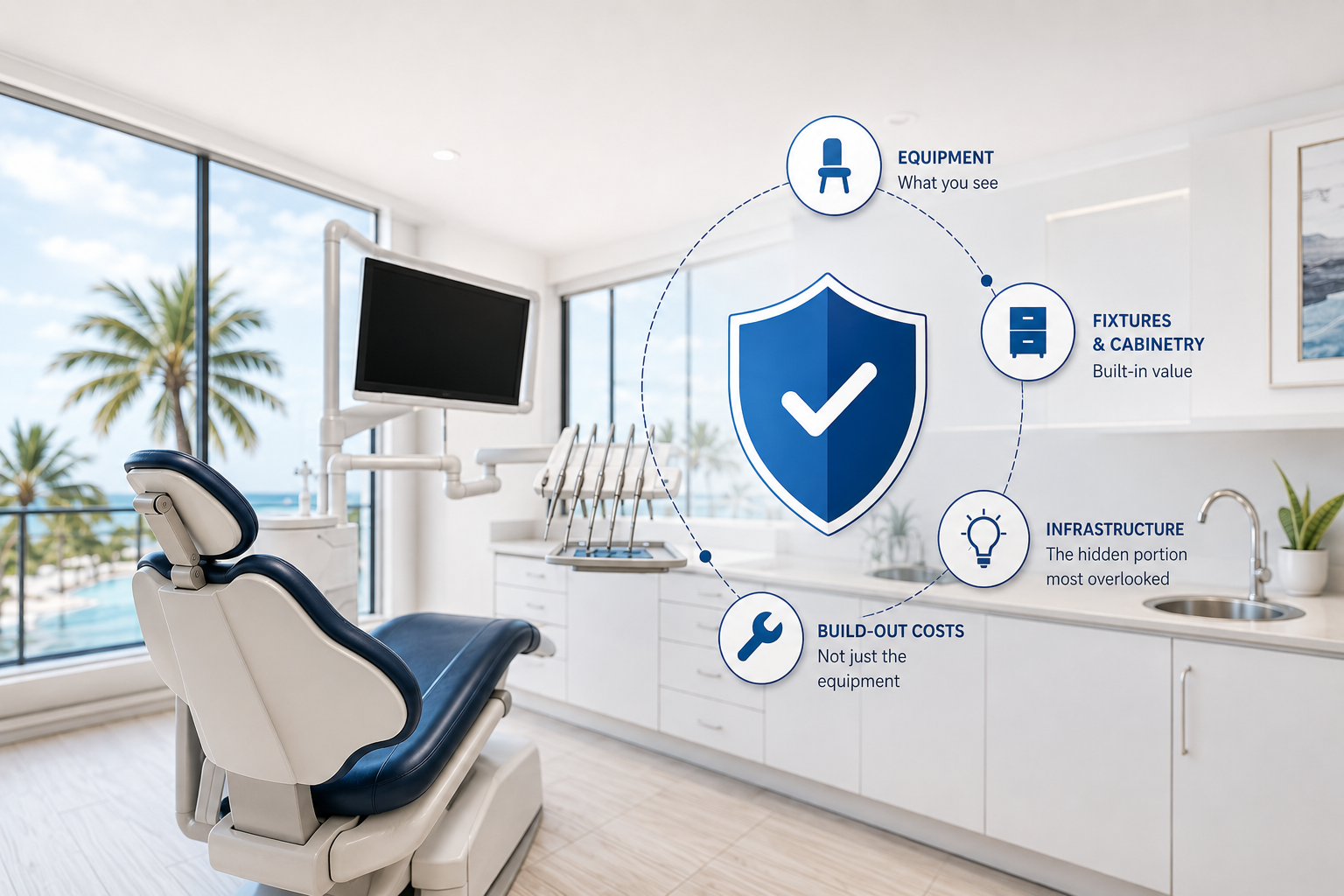
How much is enough? Defining business personal property and uncovering the “hidden” portion many practice owners miss
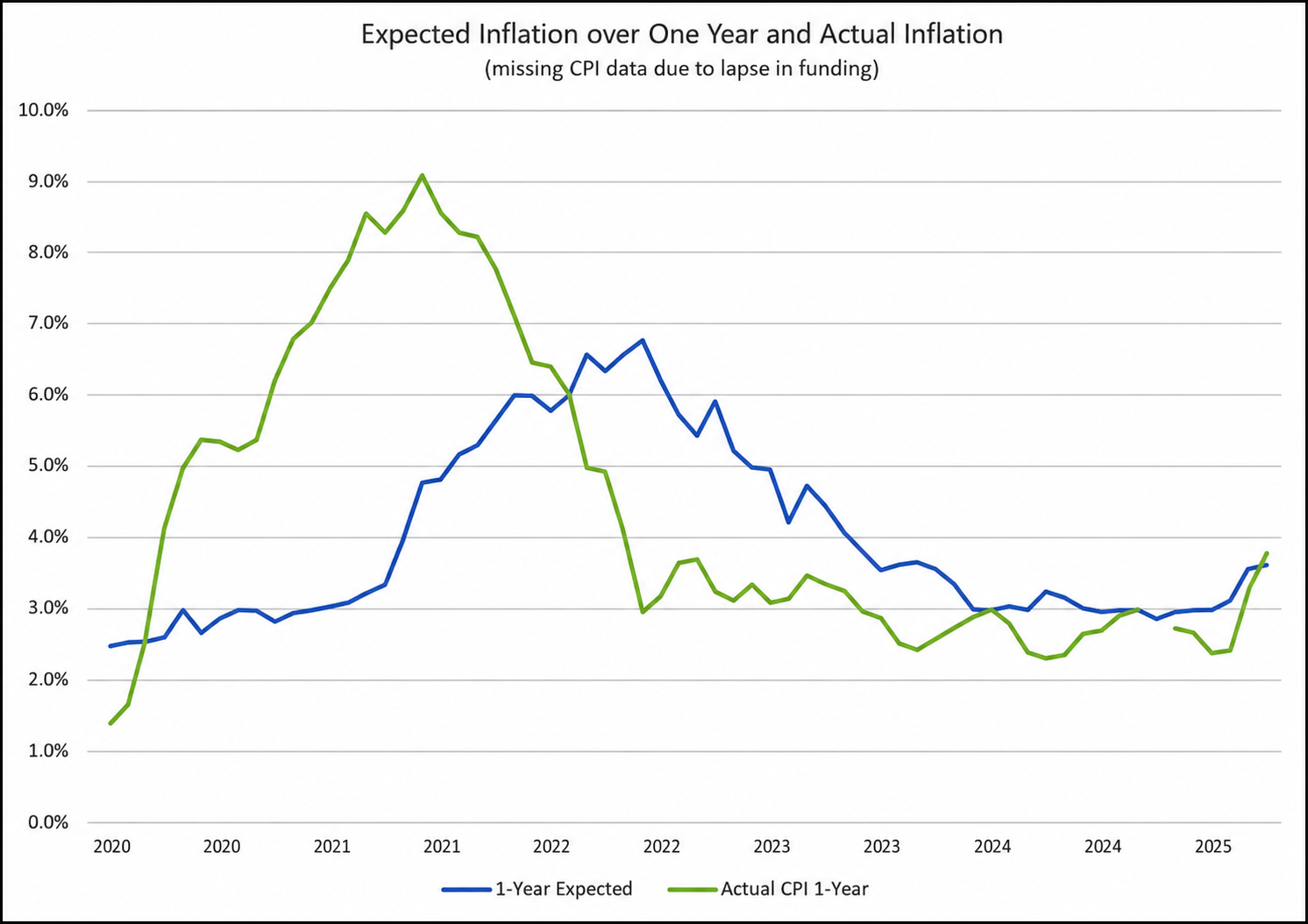
The Benefits of COLA
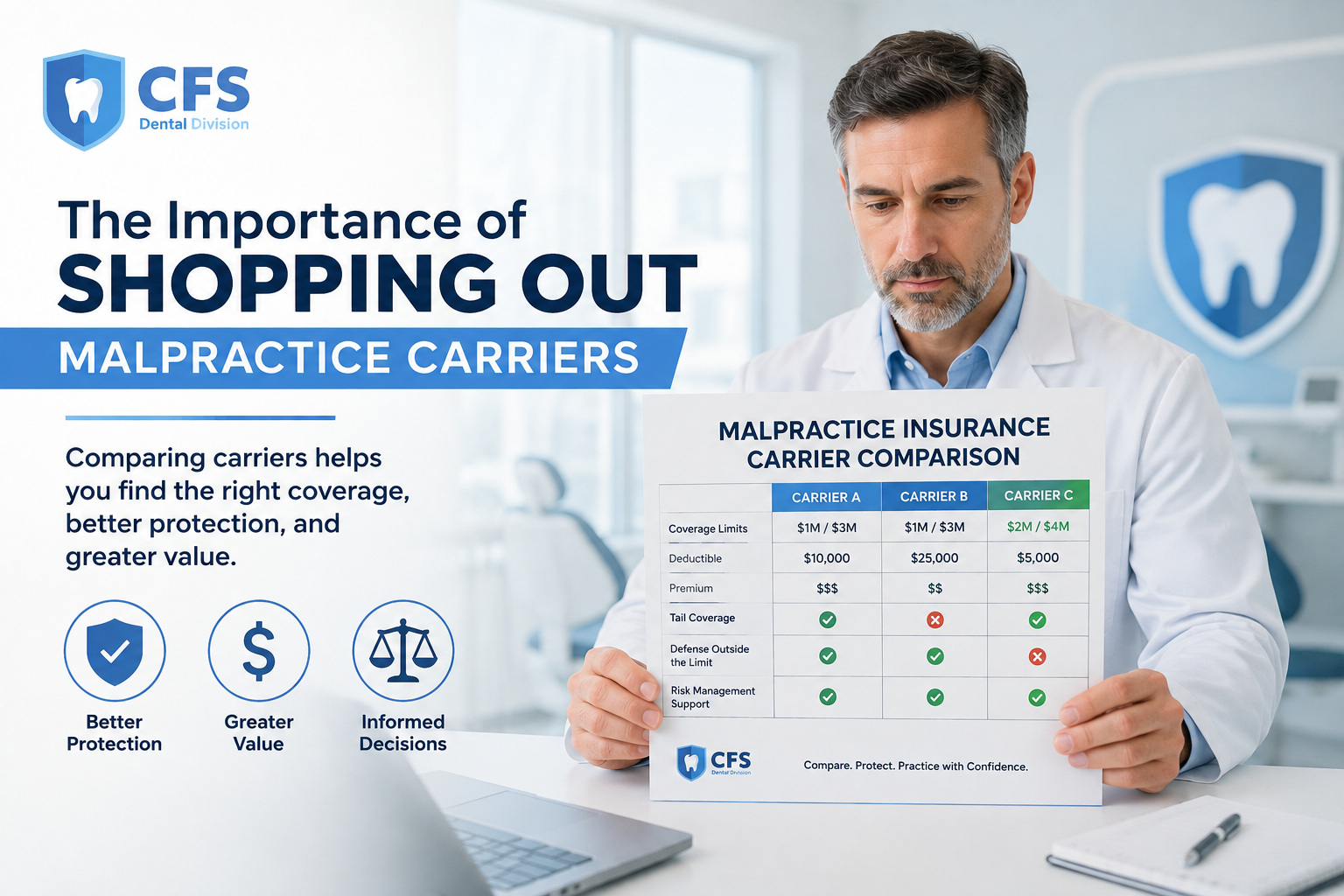
The Importance of Shopping Out Malpractice Carriers

Surplus Lines Insurance: What It Is, Why It Exists, and When You Might Need It

Why Focusing on Protection - Not Just Price - Is Most Important When Buying Business Insurance For Your Dental Practice.

Buying Your First Dental Practice: An Insurance Checklist for New Owners

Claims Made vs. Occurrence Malpractice Policies: Exploring Your Options Without Fear

The Power of Networking